Horse Racing Betting Guide
Your First Bet on Horse Racing: The Complete UK Beginner’s Guide
 Available in US
Table of Contents
- Why Horse Racing Is Still the UK’s Favourite Flutter
- The Five Things That Matter Before You Place a Bet
- How Horse Racing Betting Actually Works in the UK
- Odds at a Glance: Fractional, Decimal and What They Mean
- The Three Bets Every Beginner Should Know
- Each-way, made finally clear
- Reading a Racecard in 60 Seconds
- Step-by-Step: Placing Your First Bet Online
- Betting at the Racecourse vs Betting Online
- Bankroll Basics: How Much to Stake and Why
- Five Mistakes New Punters Make — and How to Avoid Them
- The UK Racing Calendar: When to Bet
- UKGC, Affordability Checks and What They Mean for You
- Where to Go From Here
- Frequently Asked Questions
Why Horse Racing Is Still the UK’s Favourite Flutter
My first bet on a horse was a disaster. I was twenty-two, standing in the rain at Kempton Park with a crumpled fiver and no idea what “5/2 each way” meant. I picked a horse because I liked its name — something about a midnight express — and watched it finish second to last. That was nine years ago. Since then I have spent thousands of hours studying form, breaking down odds, tracking my own bankroll, and making every mistake a new punter can make so I could eventually stop making them.
I wrote this guide because the one I needed back then did not exist. The betting sites wanted me to sign up. The tipsters wanted me to subscribe. Nobody explained how the whole system actually works — the maths, the psychology, the traps, the genuine thrill of a well-placed bet.
Horse racing is not some fading relic. Racecourse attendance hit 5.031 million in 2025, crossing the five-million mark for the first time since before the pandemic, and 68% of those who showed up were casual or first-time racegoers. The sport’s governing body, the British Horseracing Authority, has identified an addressable audience of over 25 million potential fans who have had little or no contact with racing — a figure that BHA chief executive Brant Dunshea described as a “vast, untapped market for the sport with significant potential for growth.”
Who this guide is for: You have never placed a horse racing bet, or you have done it once or twice without really understanding the process. You are based in the UK, you want to bet legally and responsibly, and you want to know what you are doing before you hand over any money. This guide covers everything from odds and bet types to bankroll discipline and the regulatory landscape — no fluff, no sales pitch.
What follows is the guide I wish someone had handed me at Kempton Park. It draws on industry data from the Gambling Commission, the BHA, and the Horserace Betting Levy Board — sources that none of the top-ranking beginner guides bother to cite. It also draws on nine years of personal experience, including plenty of losing months that taught me more than any winning streak.
Let’s start at the beginning.
The Five Things That Matter Before You Place a Bet
- UK horse racing betting generates 766.7 million pounds in annual online revenue — you are entering a massive, regulated market, not a niche hobby.
- Start with win-only or each-way bets. Understand that each way doubles your stake before you click confirm.
- Set a bankroll of 50 to 200 pounds and never bet more than 1 to 2% of it on a single race. Favourites win only about 33% of the time — losing streaks are normal.
- Complete your KYC verification immediately. Affordability checks now trigger at 150 pounds in monthly net deposits.
- Only bet with UKGC-licensed operators. Unlicensed sites control 9% of the UK’s online market and offer zero player protection.
How Horse Racing Betting Actually Works in the UK
A friend once asked me to explain horse racing betting in one sentence. I said: “You give a bookmaker money, pick a horse, and if it finishes where you need it to finish, the bookmaker gives you more money back.” He laughed, but that really is the skeleton. Everything else — odds, bet types, each-way terms, form analysis — is muscle and sinew built around that frame.
Here is how that skeleton works in practice. The UK horse racing betting market generates around 766.7 million pounds in gross gaming yield from online wagering alone, according to the Gambling Commission’s figures for the financial year ending March 2025. There are 24.4 million active online betting accounts in the country. You are not entering a niche hobby. You are stepping into a massive, highly regulated industry with deep roots and serious money flowing through it.
Gross gaming yield is the total amount bookmakers keep after paying out winnings. It is not what punters stake — it is the bookmaker’s revenue. When I say the market generates 766.7 million pounds, that is what the betting operators earned, not what punters wagered. The total amount staked is vastly higher.
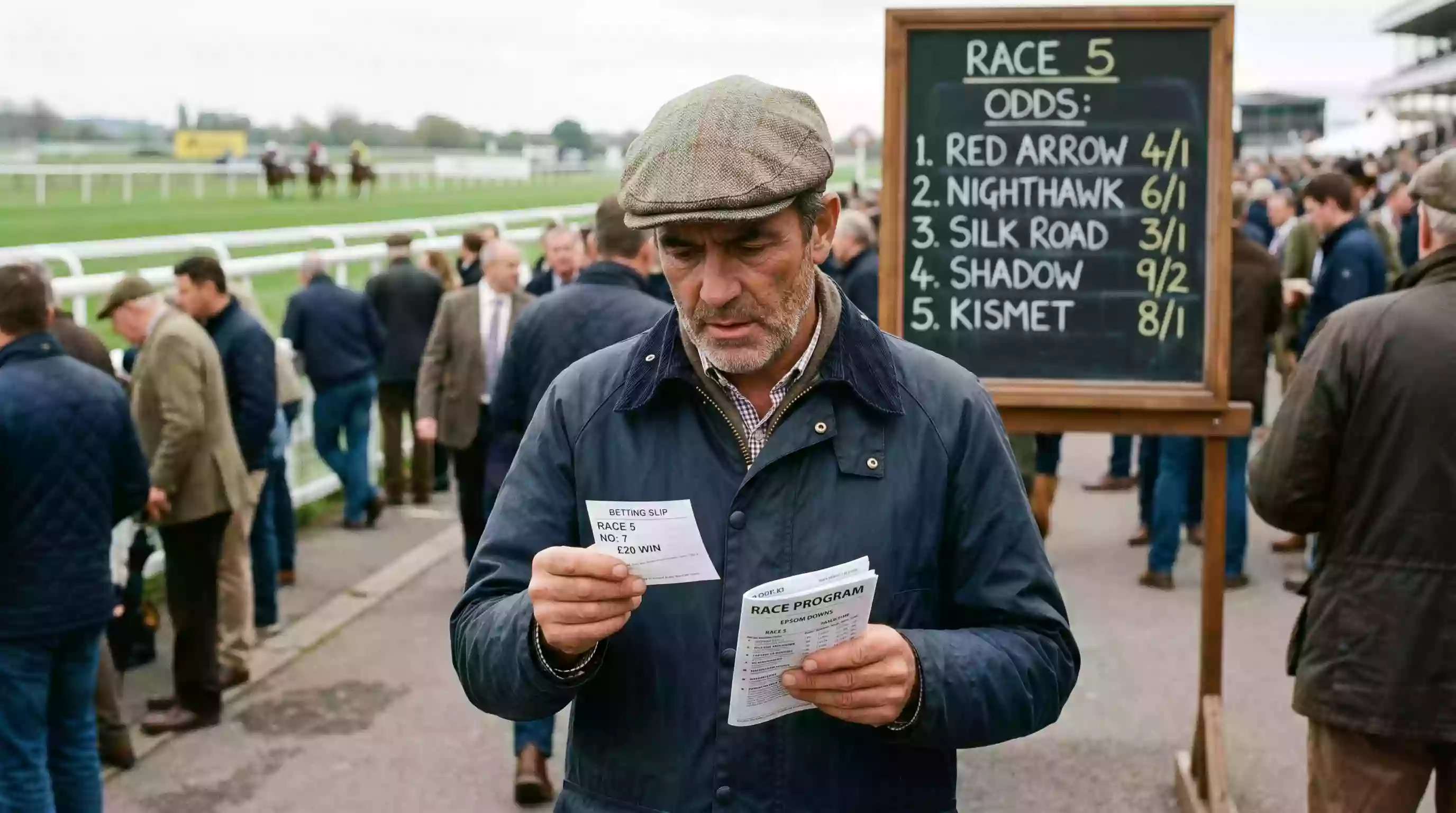
There are three channels for placing a bet on UK horse racing. Online bookmakers are the most common — you open an account, deposit funds, and place bets through a website or app. Betting shops still exist, though the number of licensed premises has shrunk to 5,825, a drop of 22.8% from pre-pandemic levels. And there is on-course betting — walking up to a bookmaker at the racecourse itself, a tradition that predates the internet by centuries. All three channels require operators to hold a UK Gambling Commission licence.
The basic transaction is simple. You choose a horse in a specific race. You decide how much to stake. You choose the type of bet — win only, each way, or something more complex. The bookmaker offers you odds that reflect the horse’s perceived chance of winning. If your horse delivers, you get your stake back plus your winnings. If it does not, you lose your stake. That is the deal.
A quick illustration: You back a horse at odds of 4/1 with a 10-pound stake. If the horse wins, you receive 40 pounds in profit plus your 10-pound stake — a total return of 50 pounds. If it loses, you lose your 10 pounds. The odds of 4/1 imply the bookmaker believes this horse has roughly a 20% chance of winning, though the real implied probability is slightly different because of the bookmaker’s built-in margin.
That margin is the engine of the entire industry. Bookmakers do not gamble. They set odds so that, across all outcomes in a race, they collect more in stakes than they pay out in winnings. Understanding this is the single most important shift in thinking for any new punter. The bookmaker is not your opponent in a game of chance — they are a business selling a product, and that product is priced to ensure they profit over time.
Odds at a Glance: Fractional, Decimal and What They Mean
Odds confused me for an embarrassingly long time. I remember staring at a betting board at Newbury, seeing “11/4” next to a horse’s name, and having no idea whether that was good or bad. The experienced punter next to me just said, “That’s a fair price.” Helpful.
Let me be the person who actually explains it.
Fractional odds are the traditional UK format, written as two numbers separated by a slash. The number on the left is the profit you make for every unit on the right that you stake. At 5/1, you win 5 pounds for every 1 pound staked. At 2/1, you win 2 for every 1. At 1/2, you win 1 for every 2 staked — meaning you have to put up more than you stand to gain, which is what “odds-on” means.
Think of it as a risk-reward scale. Short odds mean the horse is more fancied but pays less. Long odds mean less fancied but pays better. Simple.
Odds-on — when the first number is smaller than the second (e.g. 4/6, 1/2, 1/3). The bookmaker considers this horse more likely to win than not, but “more likely” is not “certain.” I have watched 1/4 shots trail in fourth and felt the collective groan of an entire grandstand.
Decimal odds are an alternative format popular with younger punters and exchange bettors. They express the total return per pound staked, including your stake. A horse at 6.0 decimal is 5/1 fractional — stake 10 pounds, total return is 60 pounds. The conversion: divide the left number by the right, add 1. So 5/1 becomes 6.0; 11/4 becomes 3.75. Most bookmakers let you toggle between formats. I switched to decimal years ago because the maths is quicker — total return is just stake multiplied by the decimal odds.
One term you will encounter immediately is the starting price, or SP. This is the official odds of a horse at the moment the race begins. If you place a bet at “SP,” you are accepting whatever price the market settles on at the off. If you take an “early price,” you lock in the odds available when you place the bet, which might be better or worse than the SP depending on how the market moves. A deeper breakdown of SP, early prices, and how bookmakers construct their margins lives in the full odds explained guide.
Quick conversion reference:
| Fractional | Decimal | Implied probability |
|---|---|---|
| 1/1 (evens) | 2.0 | 50% |
| 2/1 | 3.0 | 33.3% |
| 5/1 | 6.0 | 16.7% |
| 10/1 | 11.0 | 9.1% |
| 1/2 | 1.5 | 66.7% |
Implied probability tells you what percentage chance the odds suggest. At 2/1, the market implies roughly a 33% chance. But the bookmaker’s margin inflates these probabilities, so the true implied chance is always slightly lower. That gap is how bookmakers earn their living.
The takeaway at this stage: odds tell you both the potential reward and the market’s assessment of the horse’s chance. Every other concept — value, overround, implied probability — builds from that foundation.
The Three Bets Every Beginner Should Know
When I started out, I thought there were two types of horse racing bet: win and lose. Then somebody mentioned each way and I nodded as though I understood. I did not understand. It took a lost each-way bet on a horse that finished third in a five-runner race — where only two places paid — for me to sit down and actually learn the mechanics.
There are dozens of bet types in horse racing, from forecasts to Lucky 15s to Placepots. You do not need most of them yet. You need three.
Win Only
The simplest bet in racing. You pick a horse, you stake your money, and you get paid only if that horse finishes first. Back a horse at 3/1 with a 5-pound stake and it wins — you receive 15 pounds profit plus your stake back. If it finishes second by a nostril, you lose your fiver. Win-only bets suit races where you have a strong opinion about the winner or when the favourite is too short-priced for each-way value.
Each Way
This is the bet that trips up more beginners than any other, and it is also the one that can save you the most frustration in the early days. An each-way bet is actually two bets rolled into one: a win bet and a place bet. If your horse wins, both halves pay out. If your horse finishes in one of the designated places (usually second, third, or sometimes fourth depending on the field size), only the place half pays — at a fraction of the win odds, typically 1/4 or 1/5.
Each-way, made finally clear
Each-way example: You place a 5-pound each-way bet on a horse at 8/1. That is actually 10 pounds total — 5 on the win, 5 on the place. If the horse wins, you collect 40 pounds profit on the win half plus 10 pounds profit on the place half (8/1 at 1/4 odds = 2/1, so 5 x 2 = 10), plus your 10-pound total stake — a total return of 60 pounds. If the horse finishes second or third in a race with eight or more runners, you collect 10 pounds profit on the place half plus your 5-pound place stake — a return of 15 pounds, meaning a net profit of 5 pounds on your 10-pound total outlay.
The crucial detail: your total stake doubles with each way. A “5-pound each way” bet costs 10 pounds. I have seen new punters genuinely shocked when they check their balance after placing what they thought was a small flutter. The mechanics, including place terms by field size and payout calculations, deserve their own deep dive.
| Feature | Win Only | Each Way |
|---|---|---|
| Total stake | Single stake | Double the unit stake |
| Pays if horse wins | Yes | Yes (both halves) |
| Pays if horse places | No | Yes (place half only) |
| Best for | Strong win conviction, short-priced horses | Bigger fields, longer odds, less certainty |
Accumulator
An accumulator — acca for short — combines multiple selections into one bet. All of them must win for you to get paid. The appeal is obvious: the odds multiply together, so a four-horse acca at 3/1, 2/1, 5/1, and 4/1 offers a combined price that would turn a small stake into a meaningful return. The catch is equally obvious: one loser kills the entire bet.
I will be honest with you. Accumulators are fun, exciting, and — for most punters — a reliable way to lose money. The mathematical edge against you compounds with every leg you add. If a bookmaker’s margin on a single race is around 15 to 20%, by the time you stack four or five races together that margin balloons. They are fine as an occasional entertainment bet, but if you are building a long-term approach, singles and each-way bets are where your discipline should live. The full range of bet types, from forecasts to full-cover bets, is worth understanding once you have these three down.
Reading a Racecard in 60 Seconds
The first racecard I ever looked at might as well have been written in Mandarin. Numbers, letters, symbols, abbreviations — all crammed into a tiny grid that apparently told experienced punters everything they needed to know. One of the biggest barriers for newcomers, according to the BHA’s own research, is the complexity of racing’s terminology and form — many people perceive success as pure luck rather than a skill because they cannot decode the information sitting right in front of them.
Here is the good news: you do not need to understand every field on day one. You need five things.
Form figures
Recent finishing positions, read right to left. “2311” means the horse won its last race, finished first before that, third before that, and second before that.
Going preference
Some horses love soft ground, others hate it. The racecard tells you today’s going; the form tells you how the horse has performed on similar ground.
Distance
Horses have optimal distances. A sprinter entered in a two-mile race is not a bet — it is a donation.
Class
Races are graded from Class 7 (lowest) to Class 1 (highest). A horse that won a Class 6 race may struggle at Class 4. Or it might be improving rapidly. Context matters.
Trainer and jockey
Certain trainers and jockeys have higher strike rates at particular courses or on specific ground. This is measurable data, not gossip.

Form figures deserve a moment’s attention because they are your single richest source of information. The digits represent finishing positions in the horse’s most recent races, read from right (most recent) to left (oldest). A “1” means a win. A “0” means finished outside the top nine. Letters carry meaning too: “F” means fell, “P” means pulled up, “U” means unseated the jockey. A dash separates the current season from the previous one. So “32-112” tells you the horse finished third and second last season, then won its last three starts this season — a horse with serious momentum.
Going — the condition of the ground on race day, ranging from “firm” (dry, fast surface) through “good” and “soft” to “heavy” (waterlogged, energy-sapping). The going is arguably the most underappreciated factor for new bettors. A horse with outstanding form on firm ground can completely underperform when the heavens open and the track turns into a bog.
You can spend a lifetime mastering racecard analysis. For your first bet, focus on those five elements. Check if the horse has recent form, if it handles today’s going, if the distance suits, if it is not hopelessly outclassed, and if the trainer-jockey combination has a credible record. That alone puts you ahead of most casual punters. For a deeper breakdown of every field on a UK racecard, the racecard guide walks through each element with real examples.
Step-by-Step: Placing Your First Bet Online
I remember the anxiety of my first online bet more vividly than the race itself. Every button felt like it might trigger something irreversible. “Am I about to send money to the wrong place? Did I pick the right race? Why is there a yellow warning banner?” If that sounds familiar, you are normal. The process is straightforward once you have done it once, but the first time can feel like defusing a bomb.
Here is the sequence, stripped of jargon.
Before you place your first bet
- Choose a bookmaker with a valid UK Gambling Commission licence. Every licensed operator displays their licence number in the footer of their website. If you cannot find one, leave.
- Register an account with your real name, address, date of birth, and email. You cannot bet anonymously in the UK — the law requires it.
- Complete identity verification. This is called KYC — Know Your Customer — and every bookmaker must do it before allowing you to withdraw winnings. Most will ask for a photo of your passport or driving licence and a recent utility bill or bank statement. Do this before you deposit. Not after. Waiting until you try to cash out a win only to discover your account is locked pending verification is one of the most frustrating experiences in betting.
- Deposit funds. Bank transfer, debit card, or approved e-wallets — credit cards are banned for gambling in the UK. Start with an amount you are genuinely comfortable losing entirely. For a first bet, 20 to 50 pounds is plenty.
- Navigate to the horse racing section and select a race. Upcoming races are listed by time and course.
- Click on the odds next to the horse you want to back. This adds the selection to your bet slip.
- Enter your stake, choose your bet type (win or each way), and confirm.
That is it. Seven steps between you and your first bet. The entire process takes less time than making a cup of tea, assuming your KYC documents are accepted quickly — which, in my experience, usually takes between five minutes and a few hours depending on the operator.
Your first bet in practice: You have deposited 30 pounds. You find the 3:15 at Newbury. A horse at 5/1 catches your eye — decent form, handles today’s ground, the trainer has a record at the course. You add it to your slip, enter 3 pounds, select “win only.” Potential return: 18 pounds. You hit confirm. Your balance now reads 27 pounds. That 3 pounds is gone the moment you clicked — treat it that way.
One thing to be aware of: since February 2025, the Gambling Commission has required bookmakers to run “soft” financial vulnerability checks once your net monthly deposits reach 150 pounds. This does not affect your credit score, but it may trigger a request for additional information about your income. The threshold used to be 500 pounds, so it now catches many more casual bettors.
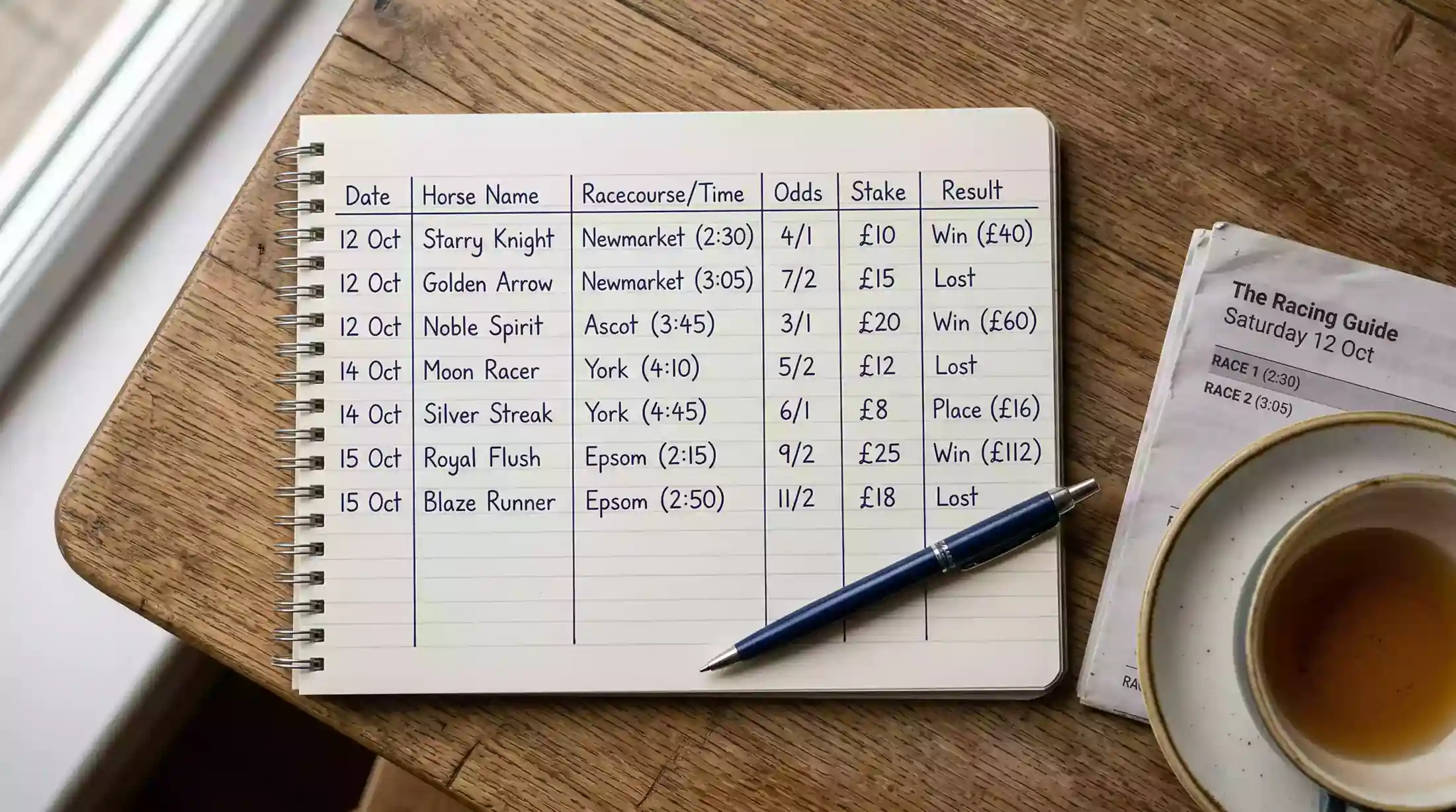
Keep a record of every bet from day one. Tracking is the single habit that separates punters who improve from punters who repeat the same mistakes for years.
Betting at the Racecourse vs Betting Online
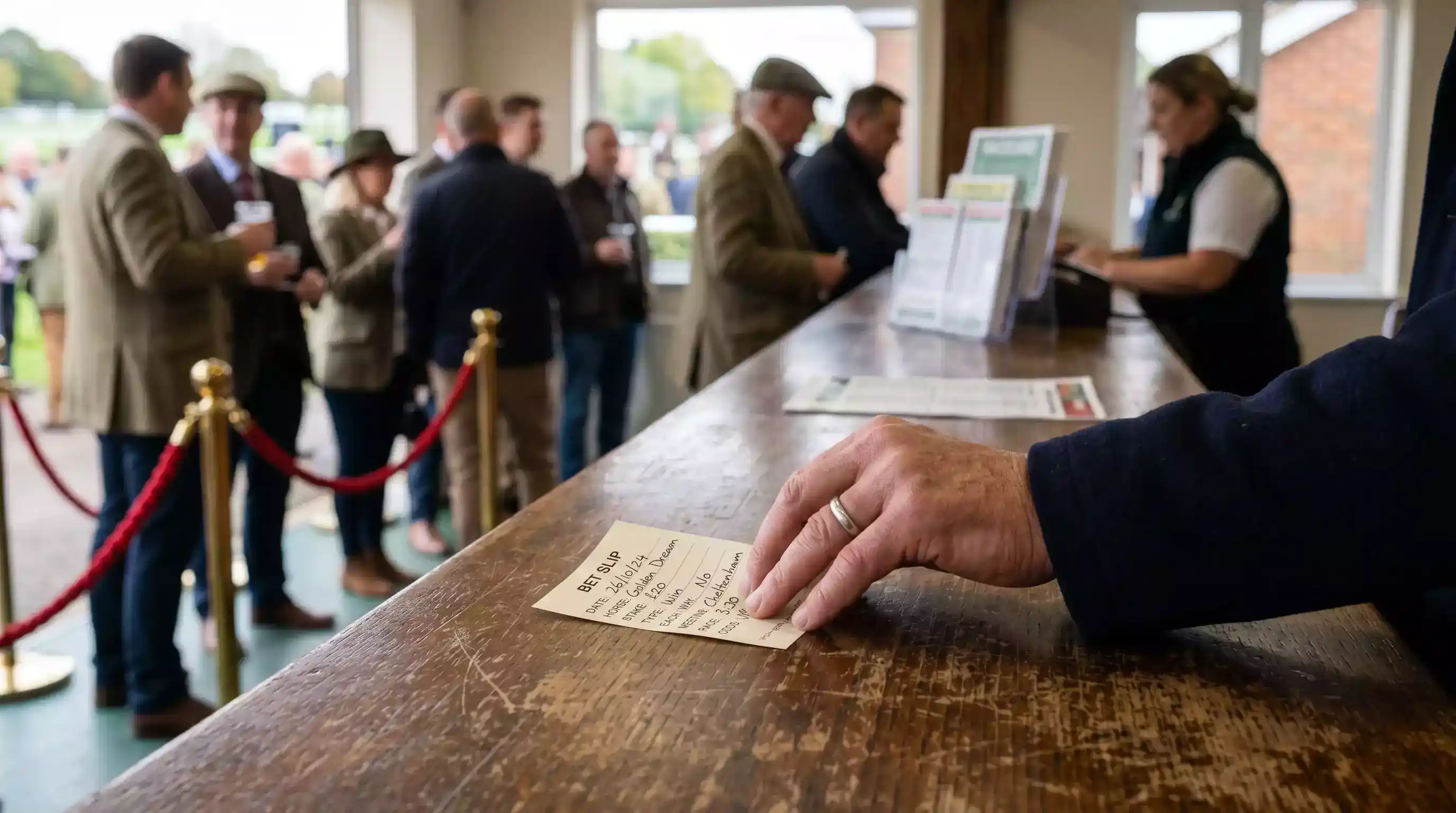
The first time I bet at a racecourse, I was terrified of looking stupid. I watched other punters walk up to the bookmaker boards, exchange a few words, hand over cash, and walk away with a ticket — all in about eight seconds. I stood there rehearsing my line like I was about to order in a foreign restaurant. “Five pounds each way on number six, please.” That is all I needed to say. Nobody laughed. Nobody judged. The bookmaker took my money, gave me a slip, and I was done.
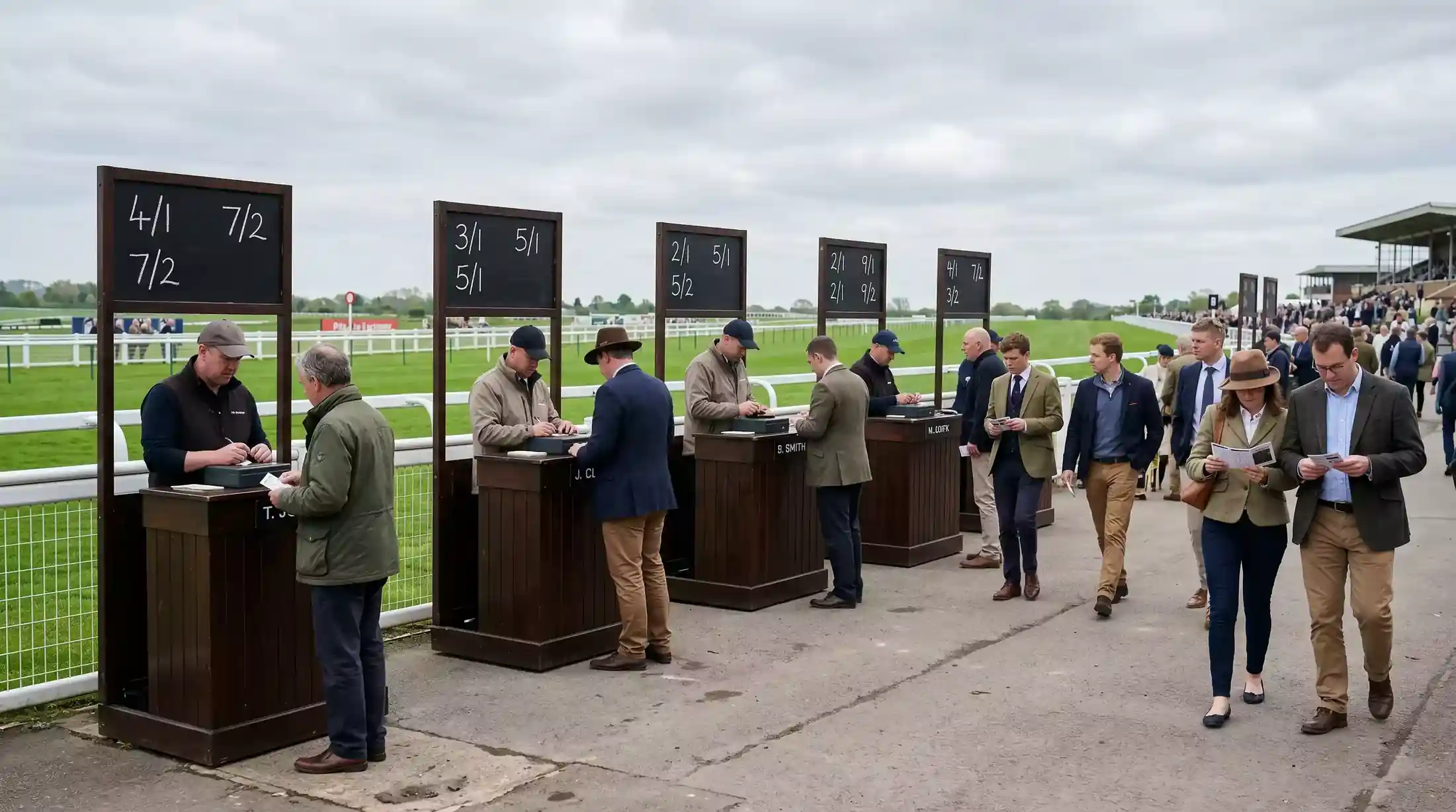
Betting at the racecourse is a fundamentally different experience from tapping your phone at home. The atmosphere is part of the product. You can watch the horses walk around the Parade Ring before each race, assess their condition and temperament with your own eyes, and react to late information — a horse sweating heavily, a jockey change, a sudden shift in the on-course market. As high-street betting shops continue to close, the racecourse remains one of the few places where betting is still a physical, social activity.
Do
- Bring cash if you plan to bet with on-course bookmakers — many still prefer it, though card payments are increasingly accepted
- Use the Parade Ring to observe the horses before each race
- Compare prices between different bookmakers in the ring — they are not all offering the same odds
- Set a fixed budget for the day and leave your debit card in the car if you need to
Don’t
- Assume the first bookmaker you see has the best odds
- Feel pressured to bet on every race — a seven-race card does not require seven bets
- Forget that on-course bookmakers may not offer Best Odds Guaranteed, which is standard online
- Ignore the Tote — pool betting at the track sometimes pays better than fixed-odds bookmakers
| Factor | Online | On-course |
|---|---|---|
| Convenience | Bet from anywhere, any time | Only on race days at the track |
| Best Odds Guaranteed | Widely available | Rarely offered |
| Atmosphere | None — just you and a screen | Crowds, noise, the thundering of hooves |
| Price comparison | Easy across multiple sites | Walk the ring and scan the boards |
| Live streaming | Often included with a funded account | You are there in person |
| Minimum stake | Often as low as 1 pound or less | Depends on the bookmaker, typically 2 to 5 pounds |
Online is where most of your day-to-day betting will happen — faster, more convenient, better prices via BOG and promotions. But a day at the races is worth experiencing at least once. The atmosphere, the ritual of handing over cash and receiving a slip, the thunder of hooves on turf — no app replicates that.
Bankroll Basics: How Much to Stake and Why
Nobody told me about bankroll management until I had already lost more than I should have. I was betting with whatever was in my account — 20 quid one day, 50 the next, then chasing a bad afternoon with a reckless 100-pound bet that made me feel sick the moment I clicked confirm. That is not betting. That is gambling without a plan, and it is how the vast majority of recreational punters operate.
The single most important number in your betting life is not your biggest win or your longest losing streak. It is the amount of money you set aside specifically for betting — money you can lose entirely without it affecting your rent, your bills, or your mental health. That is your bankroll. Everything else flows from it.
A sensible starting bankroll for a new horse racing punter is somewhere between 50 and 200 pounds. That is not the amount you spend per race or per day — it is the total pool you draw from over weeks or months. Once you have set it, you never top it up from your main bank account. If you lose the entire bankroll, you stop betting until you can genuinely afford to start a new one. No exceptions.
Within that bankroll, each individual bet should represent 1 to 2% of the total. If your bankroll is 100 pounds, your standard bet is 1 to 2 pounds. That sounds small. It is meant to sound small. At these stakes, a losing streak of 10 or even 15 bets — which is entirely normal in horse racing — costs you 10 to 30 pounds instead of wiping you out. You survive long enough to learn, adjust, and improve.
Favourites in UK horse racing win approximately 33% of the time. That means even if you only back the market leader in every race, you will lose two out of every three bets. A staking plan is not about avoiding losses — it is about surviving them.
The deeper mechanics of staking plans — flat stakes versus percentage staking, the maths of unit sizing, and how to track your bets properly — live in the bankroll management guide. For now, the principles are simple: set a bankroll you can afford to lose, bet small fractions of it, never chase losses, and keep records. Those four rules will do more for your betting career than any tip or system.
Five Mistakes New Punters Make — and How to Avoid Them
Every experienced punter has a graveyard of daft bets behind them. I once backed a horse in a Group 1 race because its name was similar to my girlfriend’s. It finished last. I have chased losses at 9pm on a Wednesday night, betting on all-weather races at Wolverhampton that I would never normally watch, just to win back what I lost that afternoon at Ascot. I have put half my bankroll on a “sure thing” because a tipster on social media seemed very confident.
All of those are textbook mistakes, and I am going to walk you through five of them so you can skip the part where you make them yourself.
Betting with your heart instead of your head. This covers everything from backing a horse because you like its name to piling money on a horse trained by someone your dad rates. Emotional attachment has no place in a bet slip. Every selection should be based on form, going, distance, class, and price. If you cannot articulate why a horse is a bet beyond “I have a feeling,” it is not a bet — it is a donation. The BHA’s director of racing, Richard Wayman, has observed that declines in betting turnover are headed in large part by affordability checks pushing punters away from licensed operators — but emotional, uninformed betting is what makes those punters vulnerable in the first place.
Ignoring the stake in each-way bets. I covered this earlier, but it bears repeating because I see it constantly. A “10-pound each way” bet costs 20 pounds. New punters who do not understand this can blow through their bankroll twice as fast as they planned. Always think in terms of total outlay, not unit stake.
Chasing losses. You have lost three bets in a row. The impulse is to increase your stake on the next one to “get it back.” This is the most destructive habit in betting. Losses are a cost of participation, not a debt. If your staking plan says 2-pound bets, a losing streak does not change that.
Betting on every race. A typical Saturday has 30 to 40 races across multiple courses. The best punters I know are ruthlessly selective — they watch 20 races and bet on three. Discipline is recognising when a race does not offer you an edge and sitting it out.
Do
- Stick to your staking plan regardless of recent results
- Skip races where you have no informed opinion
- Treat betting as a long-term activity measured over months, not afternoons
Don’t
- Double your stake after a losing bet
- Bet on horses based on names, colours, or “gut feelings”
- Follow tipsters blindly without understanding their reasoning
Following tipsters without doing your own work. Some tipsters are genuinely skilled analysts. Most are not. The problem is not following tips — it is following them without understanding why the selection was made. If you cannot assess the tip against the racecard yourself, you are outsourcing your decisions to a stranger on the internet, and that is not a sustainable strategy.
The UK Racing Calendar: When to Bet
I once met a man at Cheltenham who told me he only bets one week a year — the Festival in March. He saves up, studies the form for months beforehand, places his bets across the four days, and then does not touch a betting account until the following January. He has been doing it for 20 years. I am not sure it is a profitable strategy, but the discipline is remarkable, and he has a point: not all racing is created equal, and knowing when to bet is almost as important as knowing what to bet on.
The UK racing calendar runs year-round, but the intensity and quality vary enormously by season.
Cheltenham Festival
Four days in March. National Hunt (jumps). 28 championship races. Every single race at the 2025 Festival ranked in the top 31 most-wagered races of the entire year.
Grand National
One Saturday in April. Aintree. The single biggest betting race on the planet — approximately 250 million pounds wagered on the 2025 edition alone.
Royal Ascot
Five days in June. Flat racing at the highest level. Five million viewers tuned in on ITV in 2025, with the final day’s audience up over 20% year-on-year.
Ebor Festival / Glorious Goodwood / Champions Day
Summer and autumn highlights that draw serious betting markets and strong fields.
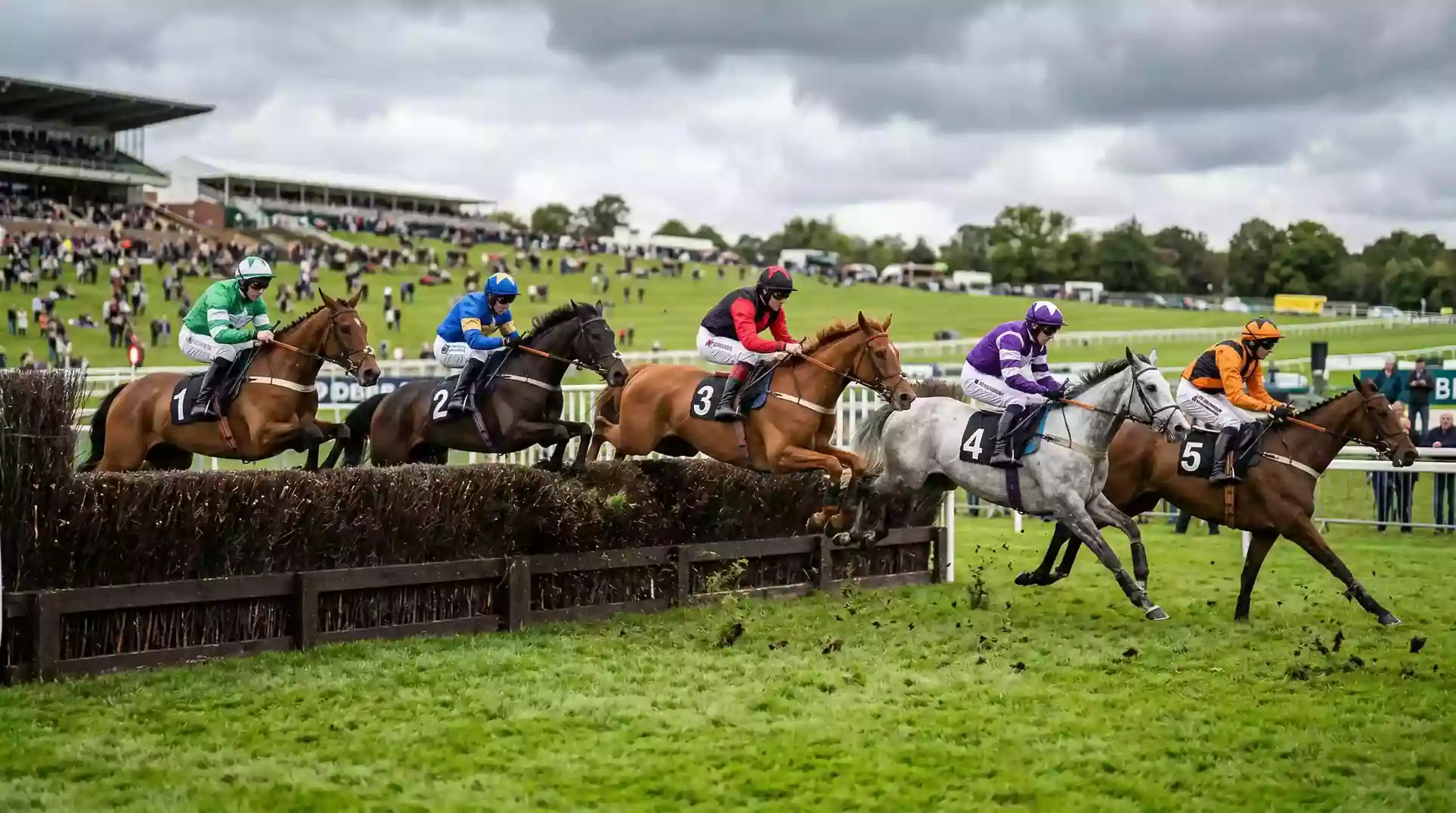
The flat season runs broadly from April through October, centred on turf racing at courses like Ascot, Epsom, York, and Newmarket. National Hunt — jumps racing — dominates from October through April, with Cheltenham and Aintree as its twin peaks. All-weather racing at venues like Kempton, Lingfield, and Wolverhampton fills the gaps year-round and provides daily racing even when the turf tracks are frozen or waterlogged.
The Grand National generates roughly 700% more wagering turnover than the Cheltenham Gold Cup — a single race that produces more betting activity than most entire meetings. BHA chief executive Brant Dunshea noted that attendances increased by nearly five per cent in 2025, driven partly by the sport’s largest-ever consumer marketing campaign.
For a beginner, the major festivals are both a blessing and a trap. They are a blessing because the coverage is extensive, the analysis is everywhere, and the atmosphere is electric. They are a trap because the sheer volume of races, tips, and promotions can overwhelm your staking discipline. My advice: pick one or two festivals to focus on in your first year. Study the form properly for those meetings. Let the rest pass without guilt. There will always be another race tomorrow.
UKGC, Affordability Checks and What They Mean for You
Regulation is not the most exciting section of a betting guide. I know that. But if you skip it, you will be blindsided the first time a bookmaker asks you to upload bank statements, or the first time your withdrawal is delayed pending “additional checks,” or — worst case — the first time you realise you have been betting with an unlicensed operator that has no obligation to pay you out.
The UK Gambling Commission licenses and regulates every legal betting operator in the country. It sets the rules on advertising, responsible gambling, player protection, and the financial checks that have become one of the most contentious topics in the industry.
Since February 2025, bookmakers must run a “soft” financial vulnerability check when your net monthly deposits reach 150 pounds. This is a frictionless, automated check that does not appear on your credit file. But if it flags a concern, the bookmaker may ask for documents proving your income or source of funds before you can continue depositing. This threshold used to be 500 pounds — the reduction has caught many more casual bettors in its net and has been a major source of friction between the industry and the regulator.

Grainne Hurst, chief executive of the Betting and Gaming Council, has argued that forcing punters to hand over bank statements is intrusive and will drive customers to the illegal market, where there are no safeguards at all. The data supports that concern: unlicensed operators now control approximately 9% of the UK’s online market, generating an estimated 379 million pounds in gross gaming yield in the first half of 2025. One in three punters staking 1,000 pounds or more per transaction has used an unregulated site in the past twelve months.
How to verify a bookmaker’s licence: Go to the Gambling Commission’s website and use their public register. Enter the operator’s name and check that their licence is active. Every licensed operator also displays their licence number and a link to the register in the footer of their website. If you cannot find this information, do not bet with them.
For a new punter, the practical implications are these. First, complete your KYC verification as soon as you register — do not wait until you want to withdraw. Second, be aware that you may be asked for additional financial documents once your deposits cross the 150-pound monthly threshold. Third, only bet with UKGC-licensed operators, no matter how attractive the odds or promotions elsewhere might appear. The licensed market has its frustrations, but it also has dispute resolution, self-exclusion tools, and a regulator that will hold the operator accountable if something goes wrong. The unlicensed market has none of that.
Whether you think the current regulatory framework is too aggressive or not aggressive enough is a legitimate debate. What is not debatable is that understanding the rules before you start betting saves you from unpleasant surprises later.
Where to Go From Here
Nine years in, I still learn something new about horse racing every week. The sport rewards curiosity — there is always a deeper question behind the one you just answered. You understand odds, so now you wonder about the overround. You understand form, so now you wonder how the going interacts with breeding. You grasp bankroll basics, so now you are thinking about expected value.
This guide has given you the foundation: how betting works, how to read odds, the three essential bet types, racecard basics, placing a bet, bankroll discipline, and the regulatory reality of UK betting in 2026. From here, the path branches.
If odds and the bookmaker’s margin fascinate you, the full odds guide goes deep. If staking psychology is your concern, the bankroll management article covers unit sizing, staking plans, and the cognitive traps that drain bankrolls.
Whatever you do next, start small. Place your first bet with stakes you will not think about if you lose. Keep records. Review your decisions after the race, not just the results. The best punters are not the ones who pick the most winners — they are the ones who understand why they picked them.
Still have questions? The answers to the most common ones are just below.
Frequently Asked Questions
What is the easiest type of bet for a horse racing beginner?
A win-only single. You pick one horse in one race, and if it wins, you get paid. There is nothing to calculate beyond stake multiplied by odds. Each-way bets are a close second, but since they double your total stake and involve place terms that vary by field size, a simple win bet is the cleanest starting point. Once you are comfortable with how the bet slip works and how odds translate into returns, move on to each way.
How much money do I need to place my first horse racing bet?
Most online bookmakers accept bets from as little as one pound, and some go lower. You do not need a large bankroll to start. A sensible first deposit is 20 to 50 pounds, which gives you enough to place multiple small bets while you learn. The goal at this stage is education, not profit. Bet with amounts that will not cause you stress if you lose every penny — because in the early days, you probably will lose more than you win.
What happens to my bet if my horse is a non-runner?
If your horse is withdrawn before the race and you placed your bet at fixed odds (not ante-post), your stake is refunded. However, if other horses are also withdrawn, a Rule 4 deduction may apply to your winnings on the remaining runners — this compensates for the improved chances of the survivors. Ante-post bets are the exception: if you bet weeks in advance and your horse does not run, you lose your stake with no refund.
Do I need to verify my identity before I can bet?
Yes. Every UKGC-licensed bookmaker must verify your identity before you can withdraw winnings, and most now require it before you can deposit. This KYC process typically involves uploading a photo of your passport or driving licence and a proof of address. Complete it as soon as you register — delaying only creates frustration later.
What is Best Odds Guaranteed and should I look for it?
Best Odds Guaranteed (BOG) means that if you take an early price on a horse and the starting price turns out to be higher, the bookmaker pays you at the better price. It costs you nothing and occasionally saves you real money. Yes, you should look for it.
Can I bet on horse racing from my phone?
Every major UK bookmaker has a mobile app or mobile-optimised website with full functionality — browsing races, placing bets, watching live streams, managing your account. Most punters do the majority of their betting on mobile. Just make sure the app belongs to a UKGC-licensed operator.
Is it legal to bet on horse racing online in the UK?
Yes, provided you use a UKGC-licensed bookmaker and you are 18 or over. Online horse racing betting is one of the most regulated gambling markets in the world. The Gambling Commission publishes a public register of all licensed operators so you can verify credentials before opening an account.
Created by the ”First bet Horse Racing” editorial team.